
The right starting point is your actual door
A small shop, an office suite and a managed property can all need a commercial locksmith, but the access problem is rarely identical. One business may be unable to open at the start of the day. Another may have a working door but need to change who holds access after a staffing change.
LockReach offers mobile business locksmith service in Arlington. Describe the property, the door and the problem before choosing a service label. Tell us whether the lock works with the door open, whether the hardware is loose and whether you have an existing working key.
The person arranging the work should also identify who can authorize it. An owner, manager or designated representative needs to understand the proposed scope and cost. For leased spaces, coordinate with the property manager where building hardware or shared access is involved.
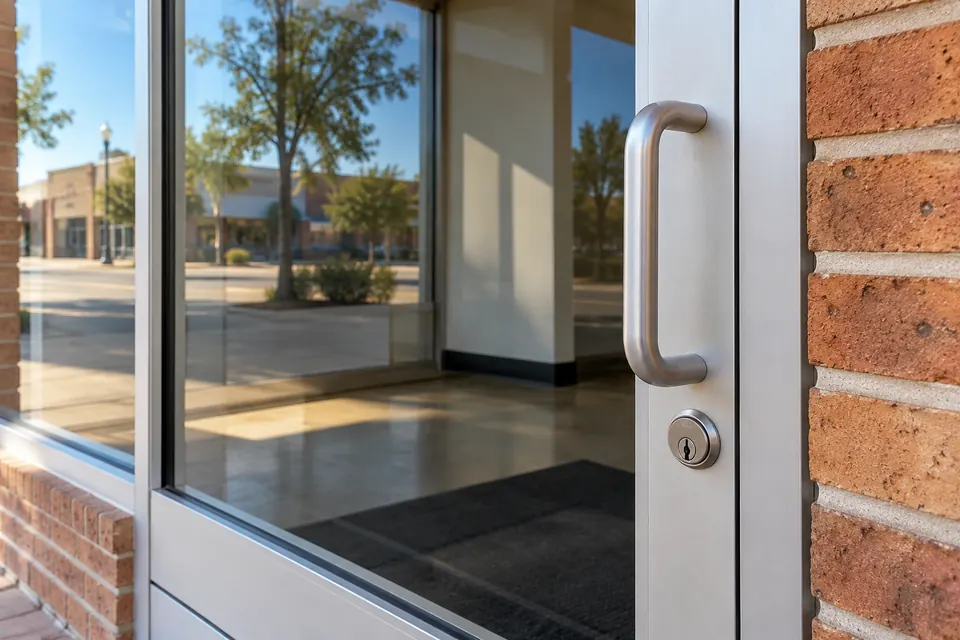
A door has more than one job.
- 01Access
Who needs to enter, and who can authorize the work?
- 02Closing
Check the door, latch and alignment together.
- 03Handover
Try the approved hardware before the visit ends.
When you cannot get in
A business lockout may involve a missing key, a failed cylinder or a door that no longer responds normally. Explain what happened on the last successful use and what has changed since then. If the key has broken or someone has tried to force the hardware, mention that too.
Give the full street address, suite number and the entrance that the technician should use. Around downtown Arlington, a customer entrance and a delivery entrance may be on different sides of the property. For a multi-tenant site, the building name alone may not identify the correct door.
Have an authorized representative meet the technician. Identification and evidence of authority to access the premises may be needed before work begins. Where a building manager controls the entrance, their involvement can be necessary even when you operate a business inside.
Changing access after a staff or tenant change
Rekeying compatible hardware can change the operating key while retaining a lock that is still suitable for the door. It may be worth discussing after a key is lost, access responsibility changes or a space passes to a new authorized tenant.
Prepare a list of the doors involved and clarify which users should have access to each. Include any door where a working key is missing. This makes the conversation more concrete than asking for every lock to be changed without first checking the existing arrangement.
Rekeying a physical lock does not update an unrelated electronic access system, alarm code or building credential. If more than one system controls access, identify each separately and coordinate with the responsible provider. A clear scope prevents a physical key change from being mistaken for a complete access reset.
Repair the problem, not just the symptom
A front door that is difficult to secure at closing time deserves attention before it becomes a lockout or a recurring operational problem. Describe whether the issue is with the key, cylinder, latch, handle or the way the door meets the frame.
The technician can assess suitable locksmith repairs and explain when replacement hardware is more appropriate. A damaged or poorly aligned door may also need work outside the lock itself. Installing another cylinder will not necessarily correct every fit or movement problem.
Do not disable or obstruct an exit while waiting for service. If the problem involves specialized exit hardware, a fire-rated assembly or another regulated system, identify that before arranging work so the correct service can be confirmed. Requirements for a particular building should be checked with the responsible property professional or authority.
Replacement hardware and everyday use
Commercial hardware needs to fit the door and how it is used. A lightly used office door and a busy public entrance face different daily demands. Explain the traffic pattern, operating hours and any recurring difficulty so the proposed hardware addresses the practical issue.
Before approving a replacement, ask which parts are included and what existing hardware will remain. The appearance matters, but so do operation, compatibility and the ability to maintain the installation. The final choice should follow the on-site assessment rather than a guess from a generic product image.
Where an existing door connects to electronic access or another security system, tell us in advance. Integration is not implied by a request to replace a mechanical lock. Compatibility and the available service must be confirmed for the particular equipment and site.
Planning a visit around the workday
For a planned job, choose a time when an authorized person can be present and the relevant entrances can be inspected. Explain any restrictions on customer access, deliveries or building entry. We can discuss availability, but a specific appointment needs to be confirmed.
If several doors need attention, prepare a short written scope: where each door is, what is wrong and what access change you want. Keep the list focused on the work being requested. A simple inventory can help avoid overlooking a secondary entrance or treating a shared building door as part of a private suite.
In and around Arlington's entertainment area, event-related access restrictions may affect the service route. Provide the usable entrance and any instructions from the property manager. We cannot promise access through a restricted venue or parking area without the necessary arrangements.
Check the work before handing over
After the agreed work is completed, test the serviced door with the technician present. Confirm that the latch and lock operate as intended and that the authorized key works. For a rekey, discuss verification that the old key no longer operates the serviced cylinder where that is part of the job.
Record which locks were serviced and retain the invoice and relevant hardware information. Keep access records within your own organization so the people responsible for the property know what changed. The locksmith visit supports that process; it does not replace your internal decisions about who should have access.
Ask about any follow-up care or conditions identified during the visit. If additional door, frame or specialist system work is needed, document it so it does not get lost in the rush to reopen or close for the day.
Get a quote for the work you need
Cost depends on the number of doors, the hardware, the type of service and the condition found on site. Ask about the service visit, labor, parts and any other work included in the estimate. Separate an urgent entry request from an optional access change or hardware upgrade.
If the technician finds something that changes the plan, confirm the revised scope and price before proceeding. Clear approval protects both the person requesting help and the business responsible for the bill.
Call 817-754-6031 to discuss commercial locksmith service in Arlington. Start with the address, the door involved and whether the priority is getting in, securing the property or planning an access change.
A couple of useful questions
Can a tenant approve work on a shared entrance?
That depends on who controls the hardware and who is authorized to change it. Coordinate with the owner or building manager before booking work on a shared door. Keep the service scope limited to the doors that have been approved.
What information helps with a multi-door job?
List each door, its location, the problem and the desired access change. Note available keys, known damage and who will approve the work. An organized list supports a clearer estimate and a more useful on-site assessment.